Egypt

Nasser’s Legacy on the 50th Anniversary of the 1967 War

Nasser and Egyptian pilots pre-1967, via Wikimedia Commons

Published in BESA Center Perspectives Paper No. 472.

EXECUTIVE SUMMARY: Egypt under Gamal Abdel Nasser once shaped and guided Arab public opinion. Cairo was the capital of the Middle East, and Nasser’s secular pan-Arab ideology challenged the West, Israel, and other Arab states. Nasser’s Egypt showed how a developing country with a large population could persevere despite tremendous economic, political, and military challenges. As the 50th anniversary of the 1967 War approaches, Egyptians and Arabs of that generation might reflect with nostalgia on a bygone era when Cairo dominated the Middle East. 

Continue reading “Nasser’s Legacy on the 50th Anniversary of the 1967 War”

Egypt

Nasser’s Peace Event Video

Thank you to everyone who attended the talk on my new and timely book, Nasser’s Peace: Egypt’s Response to the 1967 War with Israel. Hosted by the Daniel Morgan Graduate School of National Security, the evening included an intimate Q&A discussion on the analysis of the book, and lessons learned for the contemporary period.

Watch the clip here:

Order your copy of Nasser’s Peace on Amazon and Routledge.

Egypt, Israel, Uncategorized

Nasser’s Peace: Egypt’s Response to the 1967 War with Israel

NassersPeaceI am thrilled to announce the release of my first book, Nasser’s Peace: Egypt’s Response to the 1967 War with Israel.

Gamal Abdel Nasser was arguably one of the most influential Arab leaders in history. As President of Egypt from 1956 to 1970, he could have achieved a peace agreement with Israel, yet he preferred to maintain his unique leadership role by affirming pan-Arab nationalism and championing the liberation of Palestine, a common euphemism for the destruction of Israel.

In that era of Cold War politics, Nasser brilliantly played Moscow, Washington, and the United Nations to maximize his bargaining position and sustain his rule without compromising his core beliefs of Arab unity and solidarity. As the 50th anniversary of the 1967 War approaches, Nasser’s Peace provides timely analysis of how a developing country can rival world powers and how fluid the definition of “peace” can be.

Nasser’s Peace is available on Amazon.


Uncategorized

What Can You Do with a CofC History Degree?

maxresdefault

Published in the College of Charleston Department of History.

College of Charleston had a profound impact on my understanding and appreciation for history in general and Middle Eastern studies in particular. I am a South Carolina native and have always been fascinated in history and foreign affairs, ever since a family trip to the Middle East when I was a teenager. So it wasn’t a surprise when I decided to major in History. I arrived at College of Charleston enthusiastic about my studies, inspired by childhood trips to faraway lands.

The 9/11 terrorist attacks occurred during my first semester at the College of Charleston. I subsequently enrolled in as many courses relating to Islam and the Middle East as possible, hoping to better understand this complex and dynamic region. CofC’s academic experience provided a strong foundation for my appreciation and understanding of the history, politics and culture of the region, and piqued my curiosity. At the time, I was not entirely sure about my career direction, but I knew I liked research, writing and interacting in diverse settings. I enjoy challenges and over time excelled in articulating complex and critical issues relating to the Middle East. Continue reading “What Can You Do with a CofC History Degree?”

Uncategorized

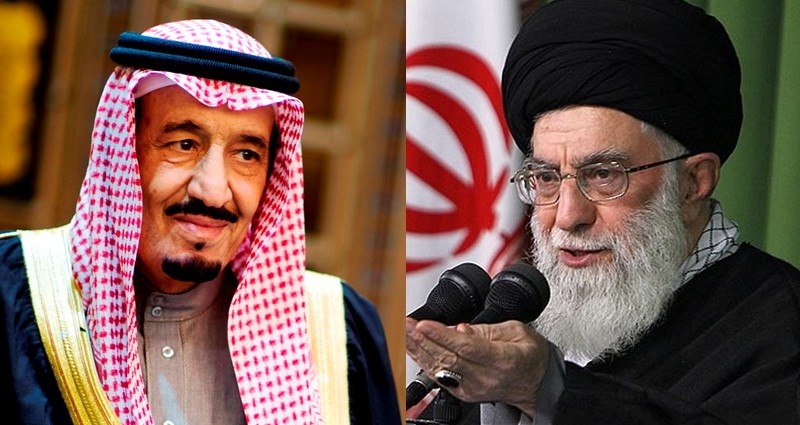
Arab Decline and Iran’s Rising Influence

Saudi-King-Salman-and-Iranian-Ayatollah-Khameini-800x425Published in Your Middle East.

Egyptian President Gamal Abdel Nasser, leader of the largest Arab nation during the 1950s and 1960s, was one of the most popular and charismatic statesmen of the twentieth century. In his 1954 memoir, The Philosophy of the Revolution, Nasser claimed that Egypt’s unique geography and historical legacy enhanced its ability to influence Africa, the Muslim world, and the Arab world. Of these three significant regions, it was the Arab world which captivated Nasser’s attention the most: “I always imagine that in this region in which we live there is a role wandering aimlessly about in search of an actor to play it.”

Nasser’s ultimate vision was to become the undisputed leader of the Arab world, and to exert his influence beyond Egypt’s borders. He implemented a brief union with Syria (1958-61) and renamed both nations as the United Arab Republic, but the project collapsed because Syrians viewed it more as an Egyptian occupation rather than a merger of equals.

Continue reading “Arab Decline and Iran’s Rising Influence”

Egypt

Egyptian Attitudes Toward the Yemen War

egy yemPublished in Your Middle East.

On March 25, Saudi Arabia led a pan-Arab military campaign in Yemen known as “Decisive Storm” to expel the Iranian-backed Houthis, who seized control of the country in January after deposing President Abd Rabbuh Mansur Hadi.

While much has been said about Sunni-Shia sectarianism, the conflict should really be viewed as a struggle for regional influence between Saudi Arabia and Iran. The proxy war in Yemen is also about whether Yemen is part of the pro-Western Sunni Arab alliance that includes Saudi Arabia, Egypt and Jordan, or if it’s part of the anti-Western Shia alliance led by Iran and its allies, Hezbollah and Syria. Continue reading “Egyptian Attitudes Toward the Yemen War”

Egypt, Jordan

White House Needs to Support Egypt and Jordan With a Consistent Anti-Terrorism Strategy

proxyPublished in the Huffington Post.

Supporting Jordan’s counterterrorism strategy and not Egypt’s is short-sighted and counterproductive in the long-term struggle to defeat ISIS.

Egypt and Jordan, both of whom are close U.S. allies, are on the front lines in a global war against terrorism. Jordan supported the U.S.-led anti-ISIS coalition after the Sept. 2014 NATO summit in Wales. Initially, the kingdom’s role was primarily intelligence and logistical cooperation with coalition forces, as Jordan historically prefers avoiding direct military confrontation with its neighbors. In Nov. 2011 King Abdullah became the first Arab leader to call for President Bashar Assad to step down but did not advocate direct Jordanian military intervention. Continue reading “White House Needs to Support Egypt and Jordan With a Consistent Anti-Terrorism Strategy”

Jordan

Refugees and the Arab Spring in Jordan

Published in Sharnoff’s Global Views.

While Jordan appears stable and has consistently overcome challenges to the throne since independence in 1946, Arab Spring protests and the influx of more than half a million Syrian refugees pose new concerns for the Hashemite Kingdom. Continue reading “Refugees and the Arab Spring in Jordan”