The failure to advance Israeli-Palestinian peace talks have produced a surge of commentary among analysts and pundits advocating various alternatives. The primary scenarios proffered include maintaining the status quo and refusing to compromise, a one-state bi-national option, a two-state option in which a Palestinian state lives next to Israel, and a three-state option in which the West Bank and Gaza Strip each with their separate governments form distinct states, perhaps uniting with Jordan and Egypt, respectively. Continue reading “Weekend Thinking: Israelis and Palestinians”
Author: Michael Sharnoff
Give Palestinian Third Parties a Chance
Published in the Daily Beast on July 26, 2012.
No, Dani Dayan, the status quo in the West Bank cannot continue.
I’ll leave it to other commentators to explain why this is the case on the Israeli side. But when it comes to the Palestinian side, it’s time to consider alternatives to Fatah and Hamas—they’re not all we’ve got.
Hamas and Fatah aren’t making Obama’s promise of democratic transition in the Arab world a reality, it might be time for all of us—Palestinians, Israelis, and Americans—to consider third party alternatives. Continue reading “Give Palestinian Third Parties a Chance”
Assad’s Chemical Revenge

Syrian dictator Bashar Assad has faced intense sanctions and international pressure from the West, Turkey and Gulf Arab states, for the nearly 20,000 deaths since the anti-government uprising began sixteen months ago. In spite of the atrocities and grave violations of human rights, pro-Assad and opposition forces appear to have reached a deadlock. However the tide may soon turn in favor of Assad. Continue reading “Assad’s Chemical Revenge”
The Egypt-Gaza Nexus
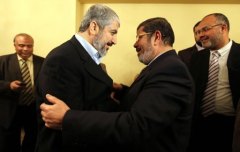
A gradual yet significant shift in Egyptian policy toward Gaza has occurred since Mohamed Morsi won the presidency in democratic elections in June. Hosni Mubarak enforced a blockade of Gaza with Israel since 2007, severely limiting the freedom of movement for Palestinians. Continue reading “The Egypt-Gaza Nexus”
Article Review
Published in American Diplomacy on June 20, 2012.
Palestinian Attitudes Toward Israel
by Dr. Michael Sharnoff
http://www.fpri.org/enotes/2012/201205.sharnoff.palestinian-attitudes-israel.html
Reviewed by Norvell B DeAtkine
The writer, a recent graduate of King’s College, London, writing for the Foreign Policy Research Institute, surveys Palestinian attitudes from the standpoint of the secularists, Hamas, Fatah, and the general public toward the state of Israel. In general he finds that Palestinians of all categories embrace “popular, non-violent resistance.” That attitude leads to demonstrations, hunger strikes, boycotts, and sanctions. Sharnoff posits that billionaire Munib al-Masri speaks for the secularists in advocating a peace with Israel in return for a state in the West Bank and Jerusalem as its capitol. Interviewing a respected moderate Islamist and professor at a Palestinian university, the writer was told that the ‘Arab Spring” has emboldened Islamist radicals and that American inaction in promoting moderate Islamists constituted a missed opportunity. Moreover, in spite of corruption and authoritarianism, which characterizes the Palestinian leadership, any uprising among the Palestinians will be directed at Israel, not the Palestinian leadership. Continue reading “Article Review”

Palestinian Attitudes Toward Israel
Published in the Middle East Media Monitor, an Foreign Policy Research Institute E-Note series, on May 23, 2012.
As the uprisings in North Africa and the Middle East enter into their second year, how have these unprecedented events impacted Palestinian attitudes toward Israel? Will Palestinians be emboldened to mimic these revolts and collectively decide to embark on another intifada? Will they continue to pursue unilateral efforts to declare statehood in the United Nations? Or will they use a diplomatic approach and reach a negotiated settlement with Israel?
A survey of attitudes from secularists, Hamas, Fatah and the general public suggests that Palestinians will continue to embrace what they describe as “popular, nonviolent resistance” to gain concessions. These tactics include seeking unilateral recognition at the UN, staging small protests in Arab villages near the controversial security barrier, organizing demonstrations like the Global March to Jerusalem, and utilizing boycotts, sanctions and divestiture programs as well as hunger strikes by prisoners.[1] Continue reading “Palestinian Attitudes Toward Israel”
Jordanians and Palestinians at a New Crossroad
Published in the Huffington Post on Apr. 18, 2012.
In the past decade, the Jordanian government has initiated a controversial policy of rescinding the citizenship of thousands of Palestinians. On April 12, Jordan announced it will also invalidate the passports of Palestinians affiliated with the Palestinian Authority and Palestine Liberation Organization. This harsh action has had little public outcry or opposition. There has been little if any threatening reaction from Palestinians and these reports have gone largely unnoticed in Western media. Continue reading “Jordanians and Palestinians at a New Crossroad”
What is the Purpose of the Arab League?
Published in the Huffington Post on Mar. 1, 2012.
On February 23, Arab League chief Nabil ElAraby urged the United Nations Security Council to issue a ceasefire in Syria. This appeal comes 11 months after Bashar Assad began his brutal crackdown, which has taken the lives of more than 7,500 civilians.
What then, precisely is the purpose of the Arab League? Formed in 1945, Article II of the Arab League Charter states that its mission is to strengthen ties between member states and “safeguard their independence and sovereignty; and a general concern with the affairs and interests of the Arab countries.” While Articles V and VI stipulate that resorting to force between two or more member-states is prohibited and may lead to suspension from the League, there is no clause specifying appropriate action if a member-state oppresses its citizens. Continue reading “What is the Purpose of the Arab League?”
 Michael Sharnoff, PhD